
Around the end of September, the questions change. In summer people ask whether it’s too hot. From now until spring they ask whether it rains all the time, whether anything is open, and whether a winter trip to Lisbon is a sensible idea or a consolation prize.
We’ve lived through every Lisbon winter of the last decade, and our honest view is that it’s one of the best-kept secrets in European travel. The light is low and golden, the queues have gone, the prices drop, and the city goes back to being a place where people live rather than a place people visit. It does rain, and there is one thing about Lisbon in winter that genuinely catches visitors out. We’ll get to both.
Here’s what November to February is actually like, month by month, and how we’d plan around it.
What the Weather Actually Does
The numbers first, because they surprise people. According to the national weather service’s thirty-year averages for central Lisbon, daytime highs sit at around 18°C in November and 15°C in December and January, coming back up to about 16°C in February. Nights drop to about 9°C in midwinter. The coldest night recorded in central Lisbon over those thirty years was 0.2°C. Snow is something that happens to other countries.
The rain is real, though. November is the wettest month of the year, and from November to January you can expect roughly ten days a month with meaningful rain. The pattern matters more than the total: rain arrives in spells as Atlantic fronts roll through, two or three grey days at a time, and then the sky clears to the deep, rinsed blue that makes winter light in Lisbon so beautiful. A typical winter week gives you a couple of wet days and several bright, crisp ones.
The days are short. Around the solstice the sun sets at about a quarter past five, so plan your outdoor sightseeing for the morning and early afternoon and save the evenings for long dinners and music.
What to pack: a proper waterproof jacket (wind makes umbrellas a gamble on the hills), a warm layer for the evenings, and above all shoes with real grip. Lisbon’s beautiful limestone pavements, the calçada, turn into an ice rink when wet. Smooth leather soles on a steep street in the rain is how visitors end up meeting the local A&E department.
The Cold Is Indoors
This is the thing nobody warns you about. Lisbon’s winters are mild outside and surprisingly cold inside.
Portuguese buildings were designed to stay cool through long hot summers: thick walls, stone or tiled floors, high ceilings, single glazing in older blocks, and very often no central heating at all. Locals have a running joke that it’s warmer in the street than in the living room, and in January it’s frequently true. A 14°C day feels lovely outdoors in the sun and quite different in a stone-floored flat that hasn’t been heated.
So when you book anywhere for a winter stay, ask the question you’d ask about air conditioning in August: how is the place heated, and does that include the bedrooms? “Heaters available” can mean anything from proper wall units to one small fan heater for the whole flat.
For the record, here’s what ours have. Both of our Castilho apartments by Eduardo VII Park have reversible air conditioning units in the living room and the bedrooms, which heat as well as cool. Our Entrecampos apartment doesn’t have air conditioning, so for winter we leave oil-filled radiators, which are slow to warm up and very good once they have.
November: Chestnuts and São Martinho
You’ll smell November before you see it. From the end of October, the chestnut sellers appear on street corners across the city with their smoking carts, and the whole of Baixa starts to smell of woodsmoke and roasting castanhas. A dozen come hot in a paper cone, and eating them while walking is one of the small, perfect pleasures of a Lisbon winter.
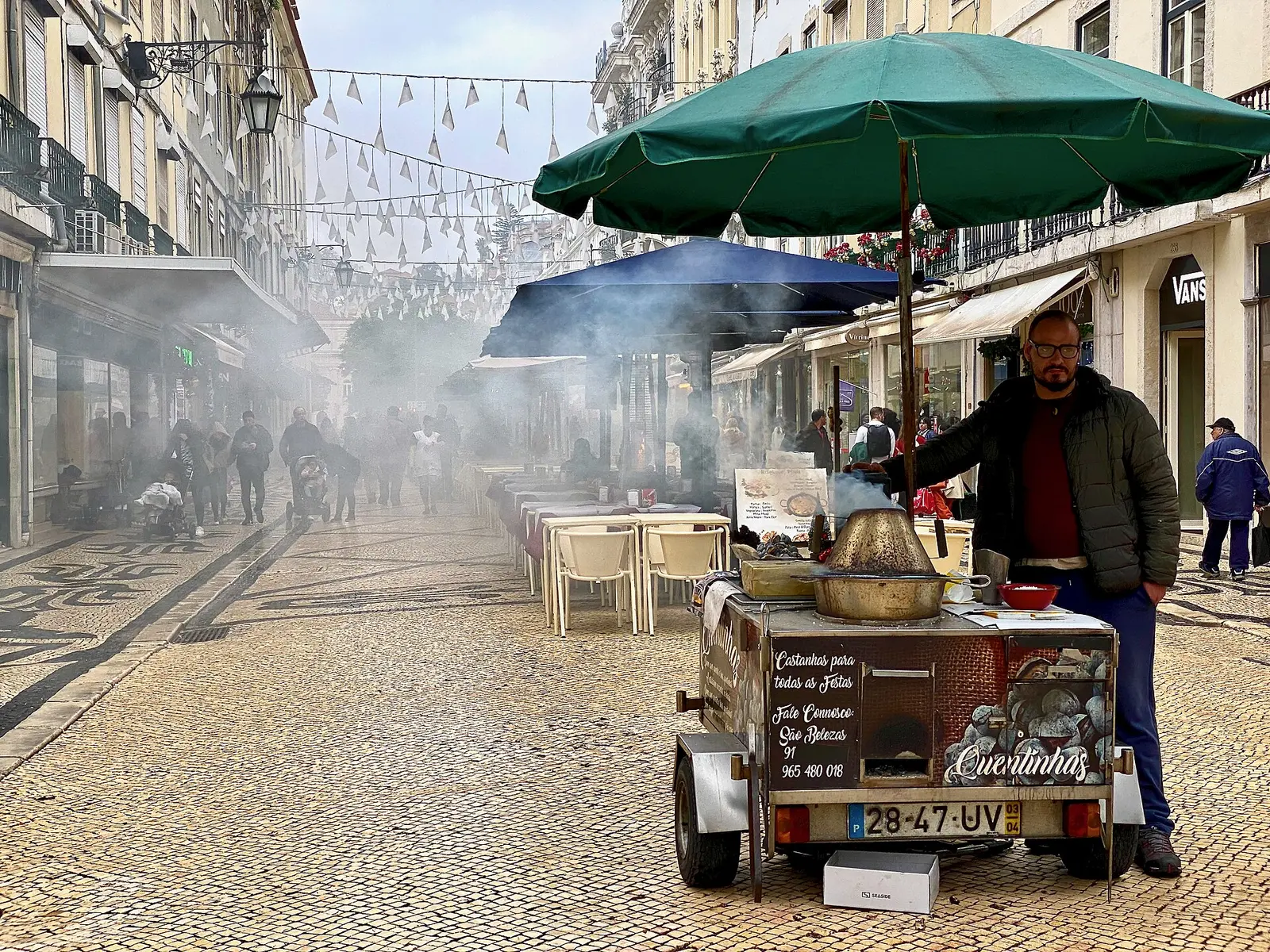
The chestnut season peaks on 11 November, São Martinho. It isn’t a public holiday, but it’s one of the most loved days in the Portuguese calendar: a magusto means roasted chestnuts with the year’s young wine, usually água-pé or the sweet fortified jeropiga, and many tascas and neighbourhood associations put on something for it. Folk wisdom also promises a Verão de São Martinho, a short spell of warm sunny weather around that date. It doesn’t always arrive, but it turns up often enough that everyone still mentions it.
November is also the month the city is at its emptiest of visitors. The autumn crowds have gone, the Christmas crowds haven’t arrived, and it’s the easiest month of the year to walk into a good restaurant without a booking.
December: Lights, Markets and the Holidays
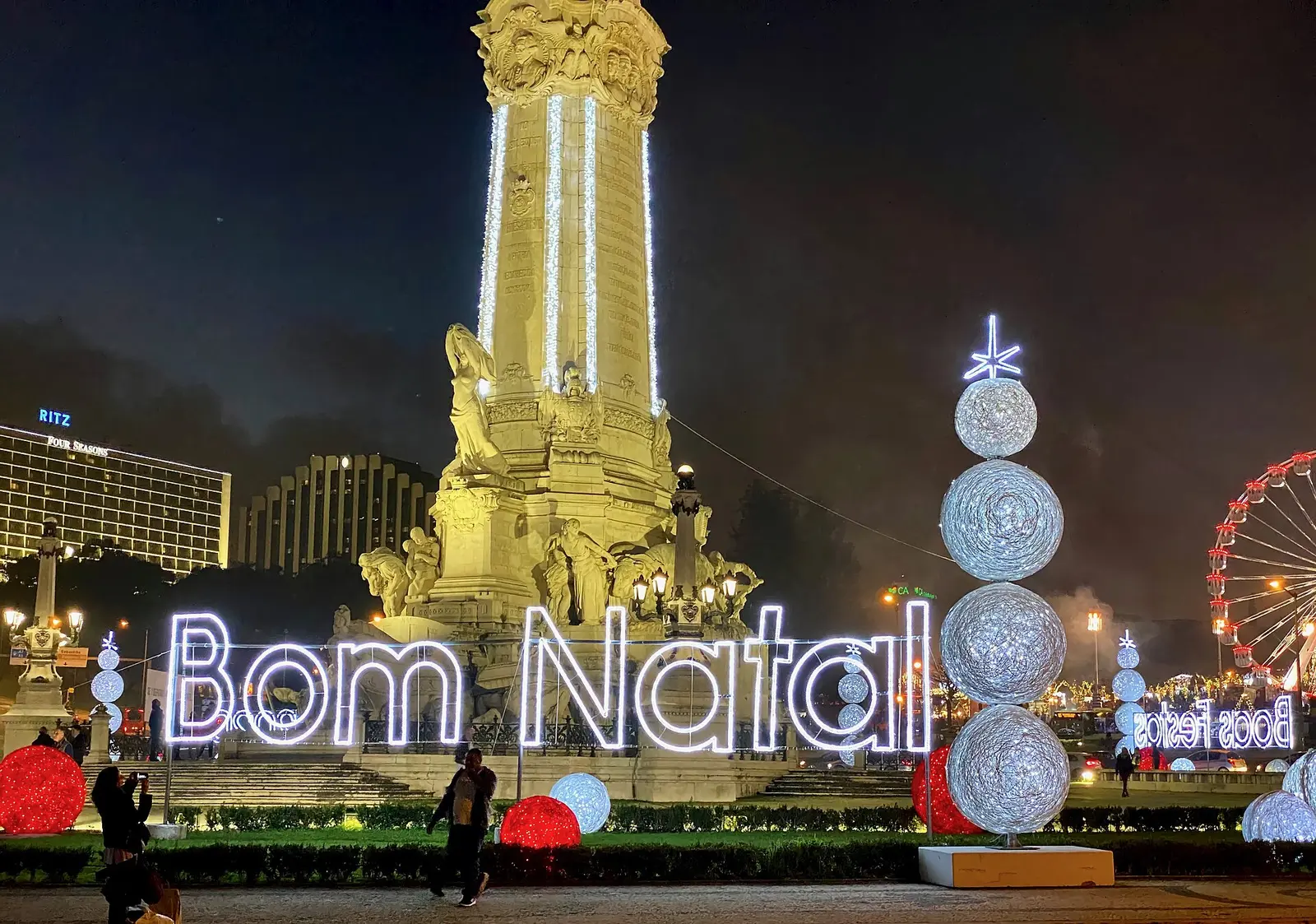
Lisbon does Christmas well without overdoing it. The city’s lights are switched on in the second half of November (last year it was 22 November, with a concert and fireworks in Praça do Comércio and a thirty-metre tree), and from then until early January the main avenues, Baixa and Chiado are strung with lights every evening. Walking down Avenida da Liberdade from Marquês de Pombal into Baixa after dark is the best free thing to do in December.
Wonderland Lisboa, the city’s big Christmas fair, takes over Parque Eduardo VII from late November into the first days of January. Entry to the park is free, and inside there’s a Ferris wheel, an ice rink, a giant tree, food stalls and a section for small children; the rides and rink are paid separately. The 2026 edition has been reported for 27 November to 3 January, but check the official dates before you build a trip around it. It’s a couple of minutes’ walk from our Castilho apartments, which makes for a very easy December evening.
A few things to know about the holidays themselves:
Public holidays. 1 December (Restoration of Independence) and 8 December (Immaculate Conception) are both national holidays, and in 2026 they both fall on a Tuesday. A lot of Portuguese families will take the Monday off and travel, so those two long weekends are busier than the rest of the month.
Christmas Eve is the big night. The Portuguese celebrate on the 24th, with consoada: salt cod with boiled potatoes, cabbage and eggs, followed by a table of sweets like rabanadas (a cinnamon-and-sugar cousin of French toast), filhós, sonhos and bolo-rei. Because it’s a family night, many restaurants close early on the 24th and stay shut on the 25th. If you’re here over Christmas, book a table well ahead or plan to cook. It’s one of the times when having a kitchen really earns its keep.
Museums and monuments generally close on Christmas Day and New Year’s Day. Check before you go on those two dates; the days in between are usually business as usual.
New Year’s Eve in Praça do Comércio
The city’s official party is in Praça do Comércio (Terreiro do Paço), and it’s free. In recent years it has followed the same shape: DJs and a headline Portuguese act from mid-evening, and at midnight around ten minutes of fireworks over the river. Last year added a synchronised drone show. It gets very full, so arrive early if you want to be near the river.
Getting there and back. The metro normally stays open until 1am on New Year’s Eve, but the station right under the square, Terreiro do Paço, closes in the late afternoon on the 31st for safety. Use Baixa-Chiado instead and walk down, and expect the walk home to be part of the night. Our guide to the Lisbon metro explains the network.
One local habit worth borrowing: at midnight, eat twelve raisins (passas), one for each chime, making a wish for each month. Have them in your pocket before you leave the flat.
January and February: The Quiet Months
The decorations come down after 6 January, Dia de Reis, which is officially the end of the bolo-rei season. After that, Lisbon has its quietest and most local weeks of the year.
This is the time we’d recommend to anyone who has already seen the big sights or who simply wants to live in the city for a while. The January sales (saldos) are on. Restaurants that are impossible in spring have tables. Museums are quiet enough to actually look at things. And the price of almost everything connected to a trip, from flights to accommodation, is at its lowest point of the year.
By February the days are visibly longer, and the year starts to turn. Carnival falls on 9 February in 2027. Lisbon itself does a fairly low-key version, but Torres Vedras, about an hour north, holds one of the biggest and most irreverent carnivals in the country, and it makes for a memorable day out.
A Rainy-Day Plan
When the front comes through, this is what we do:
The Gulbenkian. A world-class museum, a modern collection next door and one of the best gardens in the city for when the rain stops. It’s free on Sunday afternoons, and our Avenidas Novas guide has the details.
Tiles. The National Azulejo Museum, in a former convent east of the centre, is one of the most rewarding museums in the city on a wet day. It pairs well with our azulejos and street art walk for when the sun comes back.
Markets and long lunches. A covered market is the natural place to be when it’s raining. Our market guide covers which ones are worth it, and Lisbon lunch at a tasca can comfortably last until the weather changes.
Coffee and pastries. Winter is the season for lingering in a proper café with a galão and a pastel de nata, still warm. We’ve listed our favourite cafés separately.
Fado. It was made for winter evenings: small rooms, low lights, rain outside. Our fado guide explains how to find a real one.
Day Trips in Winter
Sintra is spectacular in winter, misty and moss-covered and far quieter than in summer. It is also several degrees colder and damper than Lisbon, so bring the warm layer. Our Sintra guide covers how to do it without the queues, which in winter is mostly a matter of turning up.
The coast is for walking, not swimming. A clear winter day on the Cascais promenade or the clifftops near Guincho, with the Atlantic throwing itself at the rocks, is a very good day indeed. Our beaches guide is still useful for working out where to go.
Nazaré, an hour and a half to two hours north, is where the giant waves appear between roughly October and March. They depend entirely on the swell, so watch the forecasts and go on a big-wave day rather than picking a date in advance.
So, Should You Come in Winter?
Yes, if you want Lisbon at its most authentic and best value, you’re happy to plan around a few wet days, and you like the idea of chestnuts in the street, fado in the evening and museums you can actually walk round. It’s also ideal for a longer stay, when a few grey days don’t matter.
Maybe not, if your trip is built around beaches and terraces, or if you’re travelling with small children who need to be outside all day whatever the weather.
If your dates are still open, our guide to the best time to visit Lisbon compares every season. But winter has never disappointed a guest of ours who came prepared for it.
Coming this winter? We’ll tell you honestly how each of our apartments is heated before you book, and we’re happy to send you our list of rainy-day favourites for your dates. Browse our apartments and book direct.
Image credits: “Bom Natal” at Marquês de Pombal and “Castanhas Quentinhas”, both by F Delventhal (CC BY 2.0). Both via Wikimedia Commons.