
Our apartments are here, so treat everything below with the appropriate scepticism. But this is also the part of Lisbon we actually live in, and after ten years of watching guests arrive slightly apologetic about not being in Alfama, we’ve noticed how many of them leave saying it was the right call.
Avenidas Novas is not picturesque in the way the postcards are. There are no tiled alleys, no trams grinding up a hill, no laundry strung between balconies. What there is instead is the city Lisbon built for itself in the early twentieth century when it ran out of room: wide straight avenues, Art Nouveau and Deco apartment blocks, banks, universities, hospitals, and the ordinary business of a capital. Nobody is trying to sell you anything here, and after three days in Baixa that turns out to be a considerable luxury.
We covered it briefly in our neighbourhood guide. Here’s the long version.
Where It Actually Is
Stand at Marquês de Pombal, put the river behind you, and walk north. That’s the whole geography.
The avenue runs up past Saldanha, becomes Avenida da República, passes Campo Pequeno, reaches Entrecampos, and ends at the long green rectangle of Campo Grande. The metro’s yellow line runs directly underneath the entire stretch, which means every point on it is roughly ten to fifteen minutes from Baixa and about twenty-five from the airport.
To the west, off the avenue, sit the Gulbenkian, Praça de Espanha and the zoo. To the east, Areeiro and Alvalade. Everything below is within that rectangle, and most of it is walkable end to end in about forty minutes.
The Gulbenkian, Which Is Reason Enough
If you do one thing on this side of the city, do this.
Calouste Gulbenkian was an Armenian oil magnate who spent sixty years buying the best of whatever he liked and left the whole lot to Portugal, along with the money to house it. The result is a museum of about six thousand years of things, chosen by one person with an extraordinary eye and no obligation to be comprehensive: Egyptian funerary art, Islamic ceramics and Persian carpets, Chinese porcelain, Rembrandt, Rubens, Monet, Manet, Degas, and a room of René Lalique jewellery that stops people in their tracks. It’s small enough to see properly in two hours and good enough to warrant four.
Next door, the Centro de Arte Moderna holds the best collection of twentieth-century Portuguese art anywhere. It reopened in September 2024 after a redesign by the Japanese architect Kengo Kuma, whose contribution is a hundred-metre canopy of Portuguese ceramic tiles sweeping along the front of the building, with the gardens extended underneath it.
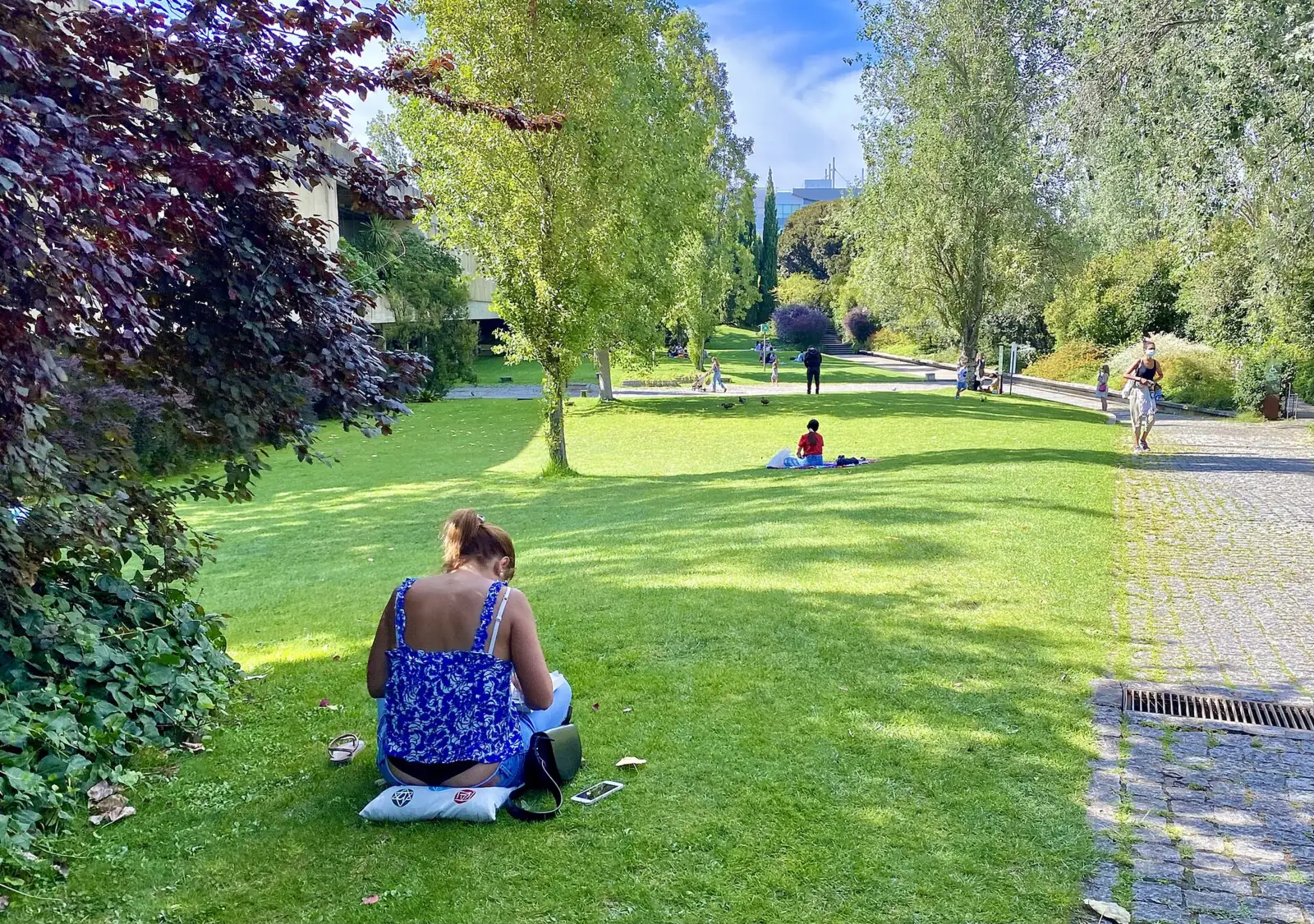
And then there’s the garden itself, which is free, open from sunrise to sunset, and the thing we’d send you to even if both museums were shut. It was laid out in the 1960s by Gonçalo Ribeiro Telles and António Viana Barreto as a piece of modernist landscape design, and it does not feel like a city park. It feels like a small piece of Atlantic woodland that the city grew around: a lake with ducks and terrapins, dense planting, an open-air amphitheatre, concrete paths that disappear into shade. In August the foundation runs Jazz em Agosto in that amphitheatre, which has been going since 1983 and is one of the loveliest ways to spend a summer evening in Lisbon.
Practical: open 10:00 to 18:00, until 21:00 on Saturdays, closed on Tuesdays. At the time of writing the museum is €16 (which includes the CAM collection), CAM alone €12, both plus temporary exhibitions €18, free for under-18s, and free for everyone on Sundays from 14:00. Prices and rules change, so check before you go. Metro: São Sebastião or Praça de Espanha.
Our tip: the Sunday free window is genuinely busy. If you’re coming in summer, the better move is a weekday morning in the museum and the garden afterwards, with lunch at the café by the lake. And on a 35°C day, this is the coolest, quietest place in central Lisbon, as our August guide says at greater length.
Campo Pequeno: The Red Brick Thing
You will see it from the metro exit and wonder what on earth it is.
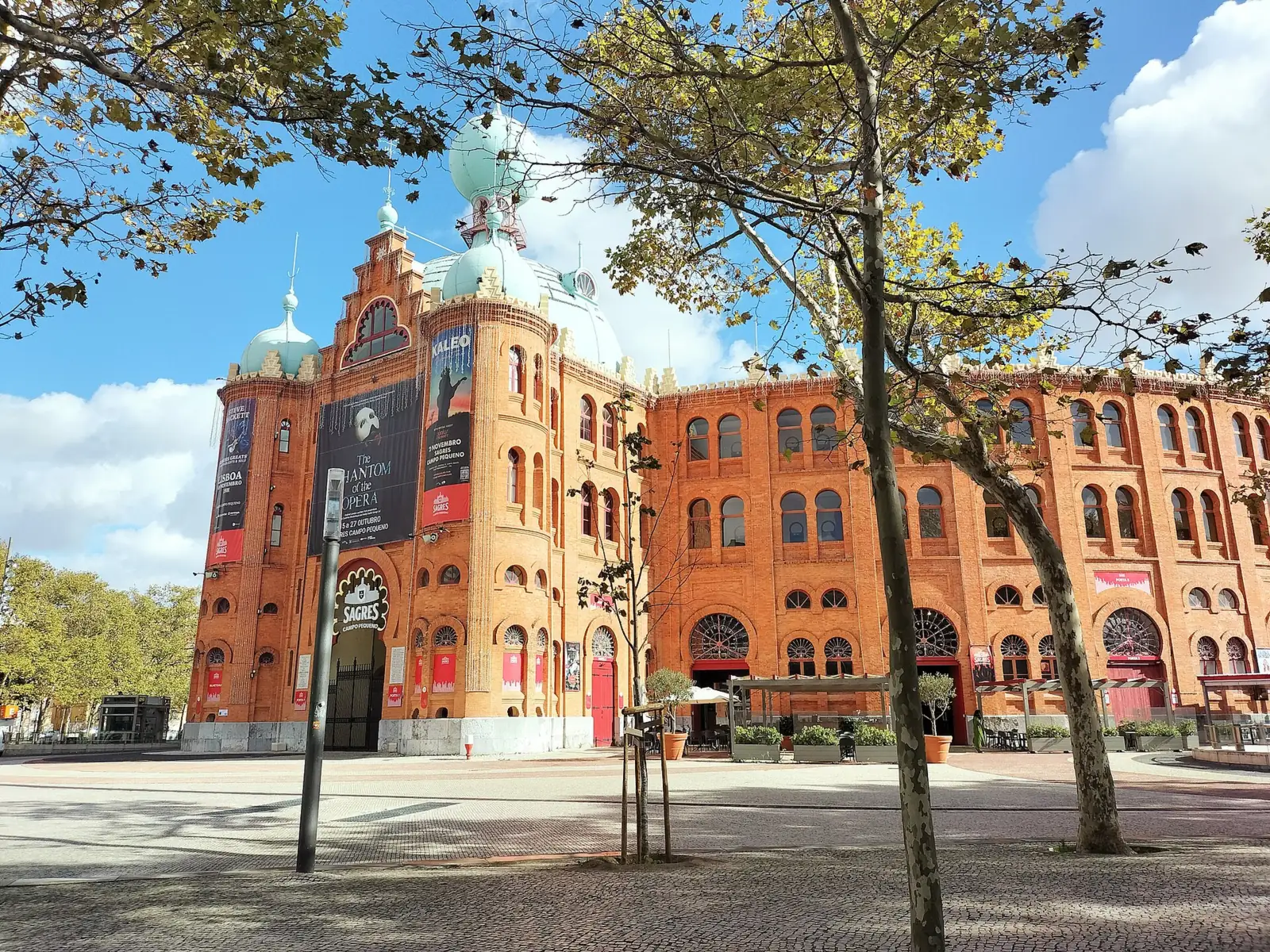
Campo Pequeno is Lisbon’s bullring, built in 1892 in a red brick Moorish revival style, all horseshoe arches and onion domes, and it looks less like Spain than like something that wandered out of North Africa and sat down in an office district. It seats around eight thousand.
It still holds touradas between spring and autumn, and it’s worth knowing what that means before you buy a ticket out of curiosity. In the Portuguese form the bull is fought from horseback and then confronted on foot by a group of eight men, the forcados, who take it head-on with their bare hands. Killing the bull in the ring has been illegal in Portugal since 1928. Plenty of visitors still find the whole thing distressing, and plenty of Portuguese people do too. We don’t push guests towards it either way; we just think you should know what you’d be buying.
The rest of the year it works as a concert arena, and underneath the ring there’s a shopping centre with a cinema and a run of restaurants, which is where half the neighbourhood ends up on a rainy Sunday. Across the road, Culturgest puts on some of the most interesting contemporary art and dance programming in the city inside a bank headquarters, and hardly any visitors ever find it.
Entrecampos: The Useful One
Our Entrecampos apartment is here, so here’s the honest pitch and the honest catch.
The pitch is the station. Entrecampos has the metro (yellow line) plus mainline trains: the Sintra line, the Azambuja line, long-distance services south, and Fertagus trains that cross the bridge to Setúbal. In practice that means you can be on a train to Sintra in two minutes’ walk without going anywhere near the city centre, which on a July morning is worth a great deal. The airport is one metro change away.
The catch is that Entrecampos is a place where people live and work rather than a place that performs. You get bakeries, hardware shops, a supermarket, tascas doing a €9 lunch for office workers, and nothing whatsoever that will end up on your camera roll.
A piece of local history that explains the shape of the place: for most of the twentieth century, the huge plot beside the station held the Feira Popular, Lisbon’s permanent funfair, with rides, beer halls and grilled chicken. It closed in 2003, and generations of Lisboetas will still tell you about it if you ask. The site has spent the years since being redeveloped into new offices and housing.
Campo Grande: The Park and Two Small Museums
Ten minutes further north, Campo Grande is a long park with a rowing lake, sports courts and a lot of shade, and at its edge are two of the most charming small museums in Lisbon.
Museu de Lisboa – Palácio Pimenta occupies an eighteenth-century country villa built, according to the story everyone repeats, by King João V for a mistress. Inside is the city’s own history, including a vast model of Lisbon as it was before the 1755 earthquake flattened it, which is the single best way to understand what actually happened to this city.
Next door, the Museu Bordalo Pinheiro is devoted to Rafael Bordalo Pinheiro, the nineteenth-century caricaturist and ceramicist who invented the green cabbage plates and the ceramic swallows you have seen in every souvenir shop in Portugal without knowing where they came from. If you enjoyed our azulejos guide, this is the same instinct in three dimensions and it’s a delight.
Football, if that’s your thing: Sporting’s Estádio José Alvalade is just north of here, and Benfica’s Estádio da Luz a short metro ride west. On a matchday the yellow line is a sight in itself.
Parque Eduardo VII and the Southern End
At the other end of the avenue, above Marquês de Pombal, Parque Eduardo VII is the formal green wedge you see in every aerial photo of Lisbon: a clipped box-hedge carpet climbing the hill, with a view straight down Avenida da Liberdade to the river.
Walk up it. At the top there’s a viewpoint, and off to the side the Jardim Amália Rodrigues with a kiosk by the water where half the neighbourhood drinks a beer at six o’clock. On the western flank sits the Estufa Fria, a “cold greenhouse” from the 1930s: instead of glass, slatted wooden battens filter the light over ponds, streams and tree ferns. It costs a few euros, almost nobody goes, and it is one of the strangest and most peaceful places in Lisbon. In late May and June the whole park fills with the Feira do Livro, the city’s book fair, which is worth an evening.
Our two Castilho apartments look out over this park, which is the single most common thing guests mention when they arrive.
Where We Eat and Drink Around Here
Not a best-of list. Just the ones we use.
Pastelaria Versailles on Avenida da República opened in 1922 and has not been meaningfully redecorated since: mirrors, stucco ceilings, marble, waiters in white jackets, and elderly regulars who have been coming for fifty years. Go for coffee and a cake mid-afternoon and look at the room. It is the best value grand café in the city precisely because it isn’t marketed to anyone.
Galeto, a few doors down, is a curved 1960s counter-diner with wood panelling and low light that stays open very late, and does a bitoque at midnight better than it has any right to.
Pastelaria Mexicana at Areeiro, ten minutes east, is a 1960s room with oval windows and an enormous cake counter, and it is where you go to feel like you’ve stepped into a Portuguese film.
Mercado 31 de Janeiro at Saldanha is a working neighbourhood market rather than a food hall: fish, fruit, flowers, a few cheap lunch counters upstairs. If you’re self-catering, this and the local supermarkets are why an apartment here works. Our markets guide covers the famous ones; this is the everyday version.
Casa-Museu Dr. Anastácio Gonçalves deserves a mention here even though it isn’t food. It’s an Art Nouveau house on Avenida 5 de Outubro, built for the painter José Malhoa, later home to a doctor who collected Chinese porcelain and nineteenth-century Portuguese painting, and left intact as a house museum. It takes an hour, costs about €5, closes on Mondays, and you will likely have it to yourself.
Should You Stay Here?
The honest version.
Yes if: you want space for your money, you’re staying more than three or four nights, you’re travelling with children and want a supermarket and a park rather than a hill and a cobbled alley, you value sleeping in a quiet street, or you plan on day trips and want a station near the door.
No if: this is a two-night first visit and you want to walk out of the door into the picture you came for. In that case stay in Chiado or Baixa, pay more, sleep less, and enjoy it.
For everyone else, the trade is simple: ten minutes on a metro, in exchange for a neighbourhood that is still a neighbourhood. Our apartment or hotel piece makes the same argument about the accommodation itself.
A Half-Day, If You’re Staying Elsewhere
10:00 Gulbenkian, museum first while you’re fresh.
12:30 The garden. Sit by the lake. This is not filler; it’s the best part.
13:30 Lunch on Avenida da República, or coffee and cake at Versailles if you ate late.
15:00 Campo Pequeno for the building, Culturgest if something’s on.
16:30 Walk south down the avenue to Saldanha and into Parque Eduardo VII, uphill to the Estufa Fria.
18:30 A beer at the kiosk in the Amália Rodrigues garden as the light goes, with the whole city laid out below you and not a tour group in sight. Then walk down Avenida da Liberdade into town for dinner, or stay put and have a drink where we would. Our drinks guide covers what to order.
Staying with us? All three of our apartments are in this part of the city: one in Entrecampos by the station, two overlooking Parque Eduardo VII. Browse our apartments and book direct, and we’ll tell you which bakery on our street is the good one.
Image credits: Praça de Touros do Campo Pequeno by Leila Borges (CC BY 4.0); Gulbenkian garden by Sharon Hahn Darlin (CC BY 2.0). Both via Wikimedia Commons.