

There are few things we enjoy more than watching a guest take their first bite of a proper pastel de nata: the shatter of the pastry, the pause, the wide eyes. And there are few things that pain us more than hearing a guest say they “tried one at the airport and didn’t get the fuss.” Not all natas are created equal — and in a city that sells millions of them a year, knowing where to go matters. After ten years of hosting (and more natas than we’d like to admit), here’s our honest guide.
What Is a Pastel de Nata, Exactly?
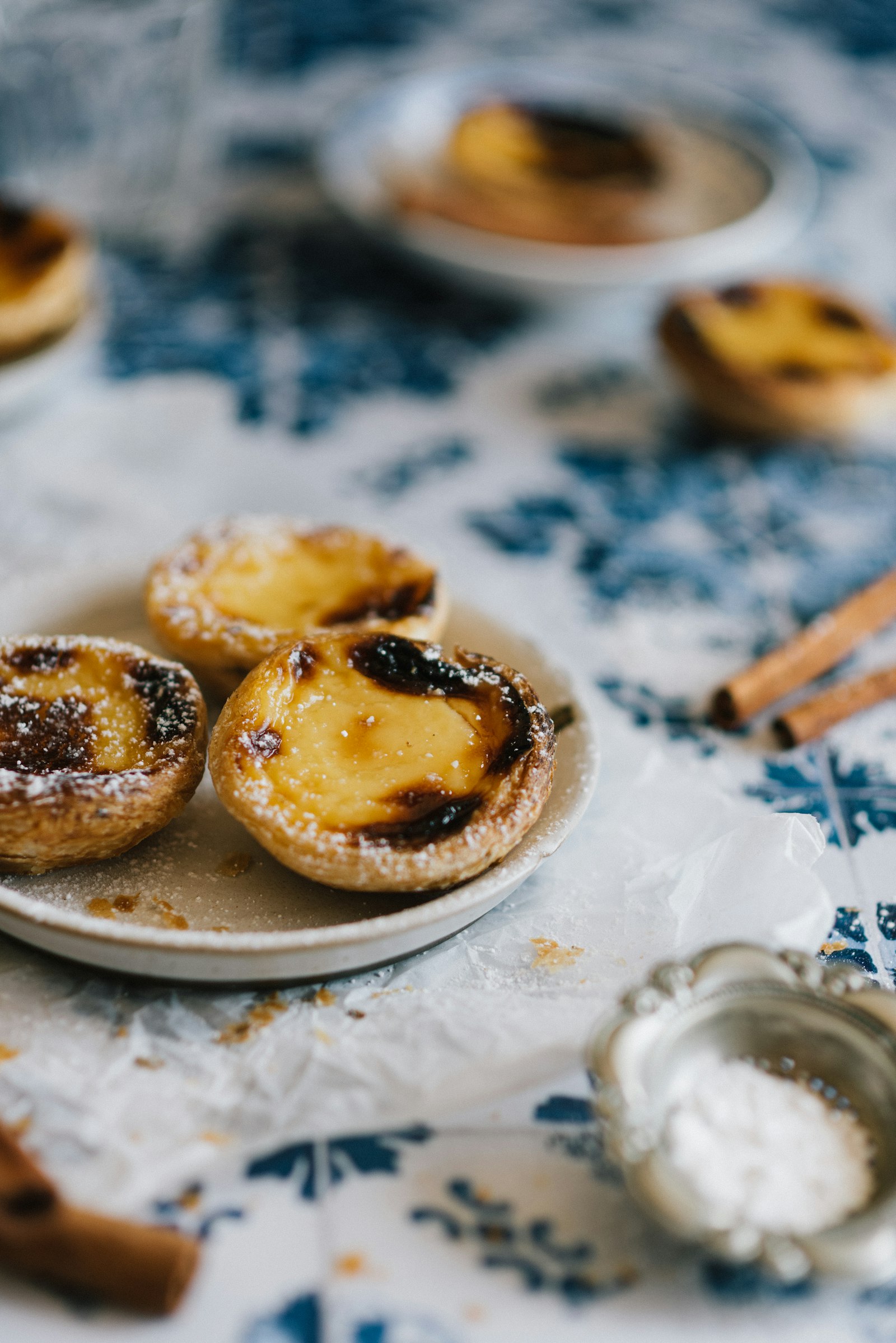
A small tart of impossibly flaky puff pastry filled with egg custard, baked at ferocious heat until the top blisters and caramelises into dark, glossy spots. Those scorched patches aren’t burnt — they’re the whole point. A good nata is served warm, the pastry crackles when you bite it, and the custard is silky rather than gelatinous, gently scented with lemon and vanilla.
The recipe was born before 1837 at the Jerónimos Monastery in Belém, where monks used leftover egg yolks (the whites went to starching habits and clarifying wine) to make sweets. When the monastery closed, the recipe passed to the sugar refinery next door — and the shop that still stands there today.
The Original: Pastéis de Belém
Pastéis de Belém is where it all started, and the only place allowed to call its tarts pastéis de Belém rather than pastéis de nata. The recipe is a genuine secret, locked away and known to only a handful of master bakers. They bake tens of thousands a day, and the tart is lighter and flakier than most, served warm with sachets of cinnamon and icing sugar.
Our tip: Skip the takeaway queue snaking down Rua de Belém — it looks apocalyptic but it’s for the counter. Walk inside instead. The building is a warren of blue-tiled dining rooms with hundreds of seats, and table service is usually faster than the street queue. Combine it with the Jerónimos Monastery and you’ve got a perfect Belém morning.
Is it the best nata in Lisbon? It’s the most historic. Whether it’s the best is a debate that divides our own household.
The Challenger: Manteigaria
Manteigaria opened in 2014 in a former butter factory in Chiado and, for many locals, promptly stole the crown. The custard is richer, the caramelisation darker, and every batch that comes out of the oven is announced with the ring of a bell. You eat standing at the counter, watching the bakers fold and press the dough behind glass, with an espresso for company.
There are now several branches around the city (including Time Out Market), and quality holds up. If you only have time for one nata experience in the city centre, this is the one we’d send you to.
Other Spots Worth Your Calories
Pastelaria Aloma in Campo de Ourique has won Lisbon’s “best pastel de nata” competition multiple times — a proper neighbourhood pastelaria, no queue, no fuss, superb nata. Perfect end point after riding tram 28 to its terminus.
Fábrica da Nata, on Praça dos Restauradores, does a very good nata in a pretty, azulejo-lined space — handy when you’re in Baixa and don’t want to trek to Belém.
Any busy neighbourhood pastelaria. Honestly, this is the local secret: a nata from an unglamorous café, baked that morning, eaten at the counter with a bica (espresso) for under €3 total, is one of Lisbon’s great everyday pleasures. If the locals are eating them, you can too.
How to Eat One Like a Local
Standing at the counter, with an espresso. A dusting of cinnamon (canela) is traditional — icing sugar is optional and mildly controversial. It should be warm; if a place serves you a cold, fridge-stiff nata, you’ve picked the wrong place. Expect to pay €1.30–€1.80. One is never enough; order two and save yourself the second trip to the counter.
What to Skip
Anywhere with a photo menu and a nata that’s been sitting in a display case since morning. The frozen-then-reheated tarts sold at some tourist-strip cafés in Baixa are the reason some visitors “don’t get the fuss.” And you don’t need the €12 “nata + port wine tasting experience” — a €1.50 tart and a €0.80 espresso deliver the same magic without the mark-up.
Staying with us? Ask when you check in and we’ll point you to our current favourite pastelaria near the apartment — there’s always one within a five-minute walk. Browse our apartments and come hungry.