

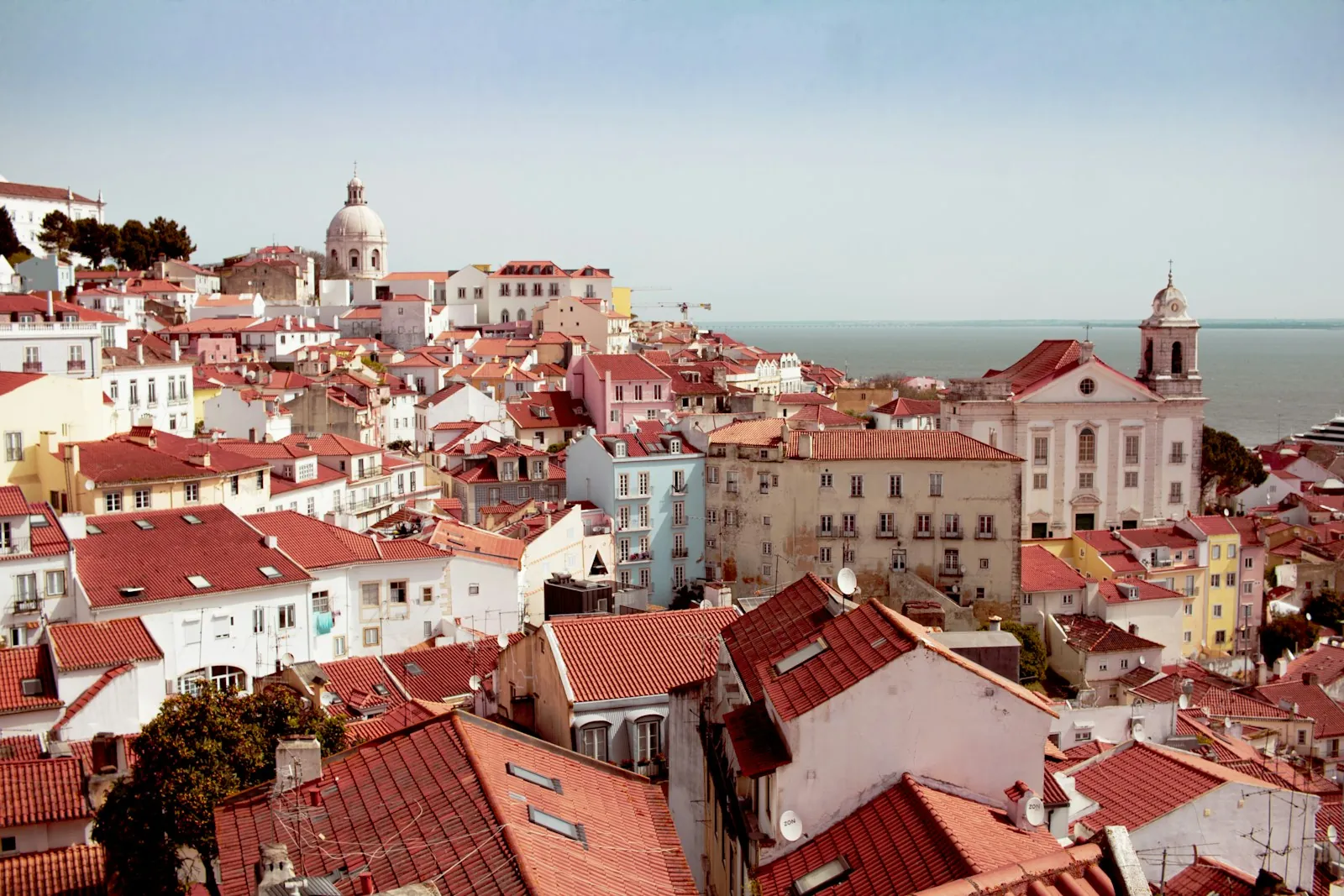
Most messages we get are about a long weekend or a week. Every so often, one starts with a different question: what would it cost to stay for a month? Some people work remotely and want a change of scene. Some are escaping a northern winter. Some are thinking about moving here and want to try it first. And some have simply done the week-long version and want to see what Lisbon is like when you’re not rushing.
A month is a different kind of trip. You stop being a visitor at some point in the second week. You have a favourite café, a supermarket you know your way around, and an opinion about which bakery does the best bread. Here’s what we’d tell a friend planning one, and the practical things that make the difference.
Why a Month Changes the Trip
On a short visit, every day has to count. On a month-long stay, you can take the sights at an easy pace in the first week, and then simply live in the city: work in the mornings, walk in the afternoons, and do the day trips at the weekend when the weather is good. A rainy day stops being a problem, because there will be another sunny one.
It also changes what matters about where you stay. For a long weekend, location and a nice bedroom are enough. For a month, you’ll care about the Wi-Fi, the kitchen, the washing machine, the noise at night and whether there’s a supermarket five minutes away. We’ll come to each of those.
When to Come
For a long stay, October to April makes a lot of sense. It’s when prices are lowest, the city is at its most local, and the weather is mild enough to be outdoors most days. A month in winter does mean some wet spells and short days, and one thing nobody warns you about: older Lisbon flats can be cold inside. Our winter guide explains what November to February is really like, and why the first question to ask about any winter rental is how it’s heated.
If you can choose, spring is lovely too. Summer is wonderful for beaches, but it’s also the busiest and most expensive time to stay, and August has its own quirks.
Before You Come: Days and Paperwork
If you’re not a citizen of an EU or Schengen country, short stays in the Schengen area, which includes Portugal, are limited to 90 days in any 180-day period, counted across all Schengen countries together. Those entries and exits are now recorded electronically at the border by the EU’s Entry/Exit System. A month is comfortably within the limit, but if you’ve spent time elsewhere in Europe recently, count your days before you book. Staying longer than 90 days is a visa matter, and if you plan to work while you’re here, check the rules that apply to your nationality and situation on official government sources. We’re hosts, not immigration advisers.
If you’re an EU citizen (or from Iceland, Liechtenstein, Norway or Switzerland), you can stay for up to three months without any formalities.
Health cover. EU visitors should bring their European Health Insurance Card (UK visitors, their GHIC). Everyone else should have travel insurance that covers a stay of this length, as some policies have a maximum trip length.
The Tourist Tax Works in Your Favour
Lisbon charges a municipal tourist tax of €4 per person per night for guests aged 13 and over, but it’s capped at seven nights per stay. On a weekend, it’s a noticeable extra. On a month-long stay, you pay for the first week and nothing after that, so the tax works out at less than €1 a night per person.
Choosing an Apartment for a Month
These are the questions we’d ask any host, including us:
How fast is the Wi-Fi? If you’ll be on video calls, “Wi-Fi included” isn’t enough. Ask for the connection type and a recent speed test. Fibre is widely available in Lisbon, but not every flat has it.
Is there somewhere to work? A dining table and a decent chair for six hours a day is a different thing from a sofa and a coffee table. Look at the photos with that in mind.
How is it heated or cooled? In winter, ask about the bedrooms as well as the living room. In summer, ask about air conditioning. Plenty of Lisbon apartments have neither, and listings are often vague about it.
Washing machine, and how do clothes dry? Tumble dryers are rare in Portuguese homes. Most people use a drying rack or a line, which is fine in summer and slow in a damp January. Self-service laundries (lavandarias self-service) in most neighbourhoods are handy for drying and for big items.
How does cleaning work during the stay? Ask whether a mid-stay clean and a change of linen are included, and how often. It varies a lot from host to host.
What’s around the corner? For a month, a supermarket, a pharmacy, a café and a metro station within walking distance matter more than a postcard view.
For the record, here’s what we can tell you about ours. All three apartments have a full kitchen, a washing machine and a Nespresso machine, and all three are a short walk from a metro station. The Entrecampos apartment has a combined washer-dryer; the two Castilho apartments have a washing machine and a drying rack. Both Castilho apartments are on fibre, and the one in 8D is a 491 Mbps connection. For heating, the Castilho apartments have reversible air conditioning, and Entrecampos has oil-filled radiators for winter and fans for summer.
Working Remotely
Time zone. Lisbon keeps the same time as London: one hour behind Paris, Berlin and Madrid, and five hours ahead of New York. That makes a morning in Lisbon overlap with continental Europe, and an afternoon with the US East Coast.
Cafés. Lisbon’s traditional cafés and pastelarias are built for a coffee standing at the counter, not a laptop for three hours. Specialty coffee shops are much more relaxed about it, and our coffee guide lists the ones we like. Buy something every hour or so, and avoid taking a table for four at lunchtime.

Coworking. Lisbon has a large coworking scene, including several spaces around Marquês de Pombal and Saldanha. Most sell day passes and monthly memberships, and a month of hot-desking usually works out much cheaper per day than buying day passes. Prices vary widely, so compare a few before committing.
Libraries. The city’s public libraries are a free and very civilised alternative. Our favourite is the Biblioteca Palácio Galveias, in a former aristocratic palace in Campo Pequeno, about ten minutes’ walk from our Entrecampos apartment. It has reading rooms, a garden, and long opening hours on most days; check the current timetable before you go, as it changes with the season.
Getting Around for a Month
For a short stay, tapping your bank card or using zapping credit is the simplest way to pay for the metro, as our metro guide explains. For a month, a monthly pass is worth considering:
- Navegante Municipal (€30 a month): unlimited travel on public transport within the city of Lisbon, including the metro and Carris buses and trams.
- Navegante Metropolitano (€40 a month): the same across all 18 municipalities of the Lisbon metropolitan area, including the suburban trains to Sintra and Cascais and the ferries across the river.
Two catches. The pass runs by calendar month, from the 1st to the last day, not for 30 days from when you buy it, so it suits a stay that lines up roughly with a month. And it has to be loaded onto a personalised navegante card with your name and photo, which is a different card from the €0.50 one sold in the machines. Ask at a metro ticket office as soon as you arrive, because it isn’t always issued on the spot. If your dates straddle two months, zapping or contactless may simply be easier.
If you’ll be doing the day trips at weekends, the metropolitan pass pays for itself quickly. Our guides to Sintra, the best day trips from Lisbon and the beaches near Lisbon are all reachable by train.
Groceries and Cooking
A month of restaurants gets expensive and, eventually, tiring. Cooking at home is one of the pleasures of a long stay, and Lisbon makes it easy.
The big supermarket chains are Pingo Doce, Continente and Lidl, and many branches open every day, including Sundays. Near our apartments: there’s a Continente and a Lidl about five minutes’ walk from Entrecampos, and a Continente Bom Dia about eight minutes from Castilho, with a small grocer across the street for basics.
For fish, fruit and vegetables, a neighbourhood market is better and often cheaper. Our market guide covers the main ones, and our guide to what to eat in Lisbon will give you some ideas of what to cook. For bread, find your nearest padaria and buy papo-secos in the morning.
Tap water in Lisbon is safe to drink. Recycling goes into the street bins called ecopontos: yellow for plastic and metal, blue for paper and card, green for glass.
Staying Connected and Healthy
Phone and data. Visitors from the EU roam at no extra cost. Everyone else can buy an eSIM before arriving, or a prepaid SIM from MEO, NOS or Vodafone in Lisbon. Bring your passport.
If you feel unwell. The national health line SNS 24 (808 24 24 24) will give you medical advice by phone and tell you where to go. For an emergency, call 112. Portuguese pharmacies (look for the green cross) are a good first stop for minor problems, and the pharmacists are well trained and often speak English. There’s always a duty pharmacy (farmácia de serviço) open at night in each area, and the list is posted on every pharmacy door.
A Rhythm That Works
The rhythm we’d suggest:
Week one: the big sights, while everything is new. Our three-day itinerary is a good place to start.
Weeks two to four: work or rest on weekdays, one neighbourhood at a time in the afternoons, day trips at the weekends. Lunch is the main meal, as it is for everyone here, and the prato do dia at a local tasca is the best-value meal in the city.
Throughout: something that isn’t on a tourist list. A Portuguese class, a gym or a sports club, a fado night at the same small house more than once, a Sunday walk in the same park. That’s the point where a month in Lisbon stops feeling like a holiday and starts feeling like living here.
Asking for a Monthly Rate
If you’re planning a stay of a month or more, ask your host directly for a monthly rate rather than just multiplying the nightly price. Many hosts price longer stays differently, and we quote them separately.
For ours, send us your dates on WhatsApp and tell us which apartment you’re interested in, or ask us which one would suit you. There’s a “monthly rate” button on each apartment page and on our contact page. If you’re still choosing a part of the city, our neighbourhood guide compares the main areas, and our Avenidas Novas guide describes the residential area where all three of our apartments are.
Thinking about a month in Lisbon? Tell us your dates on WhatsApp and we’ll send you a monthly rate, along with an honest answer about which apartment fits the way you’ll live and work. Browse our apartments or get in touch.
Photos via Unsplash: Alfama rooftops by João Reguengos; working in a Lisbon café by Ummano Dias.