
Guests ask us every week where to eat. Far fewer ask what to order once they’re sitting down, and that’s usually the harder question. A Lisbon tasca menu is often handwritten, entirely in Portuguese, and full of dishes that sound like a list of ingredients rather than a meal. Cozido. Pica-pau. Bulhão Pato. The waiter is busy, the table next to you clearly knows what they’re doing, and you end up pointing at the grilled chicken.
Nothing wrong with the grilled chicken. But Portuguese food is one of the great undersold cuisines of Europe, and it rewards a little homework. Here are the dishes we’d want a friend to try, what they actually are, and a few things about how Lisbon eats that will make ordering much easier.
Before You Order: How Lisbon Eats
Lunch is the serious meal. Locals eat between about 12:30 and 2:30pm, and many tascas offer a prato do dia, the dish of the day, written on a board or a sheet of paper by the door. It’s usually the best-value meal in the city and often the best cooked, because it’s what the kitchen made fresh that morning. Dinner starts later than in northern Europe, from around 7:30 or 8pm, and small traditional places can stop serving earlier than you’d expect.
The things that arrive before you order. Bread, butter, olives, sometimes cheese or a small plate of ham. This is the couvert, and it isn’t free. It’s also not compulsory: you only pay for what you eat, so if you don’t want it, just ask for it to be taken away. Nobody will be offended.
Portions are generous. A single main course in a tasca will often feed one very hungry person or two normal ones. Many places do a meia dose (half portion) if you ask, and sharing is completely normal.
Fish is often sold by weight. If you see preço ao kg next to a fish, the price is per kilo, not per plate. Ask them to show you the fish and tell you the price before it goes on the grill. It’s standard practice, and the good places are happy to do it.
Two Sandwiches You’ll Remember
Bifana. Thin slices of pork marinated and simmered in garlic, white wine and spices, stuffed into a soft white roll (papo-seco) with some of the juices. Add mustard if you like. It costs a few euros, it’s eaten standing at a counter, and it’s one of the best things you’ll eat in the city. In Lisbon the bifana is a snack for any time of day, ideally with a small cold beer.
Prego. The beef equivalent: a thin steak cooked fast with lots of garlic, in a roll. Order a prego no prato and you get it on a plate instead, usually with a fried egg, chips and rice. Lisbon has a tradition of eating a prego at the end of a seafood feast, as a kind of savoury dessert. At Cervejaria Ramiro, one of our favourite restaurants in Lisbon, it’s practically compulsory.
Bacalhau, the Faithful Friend
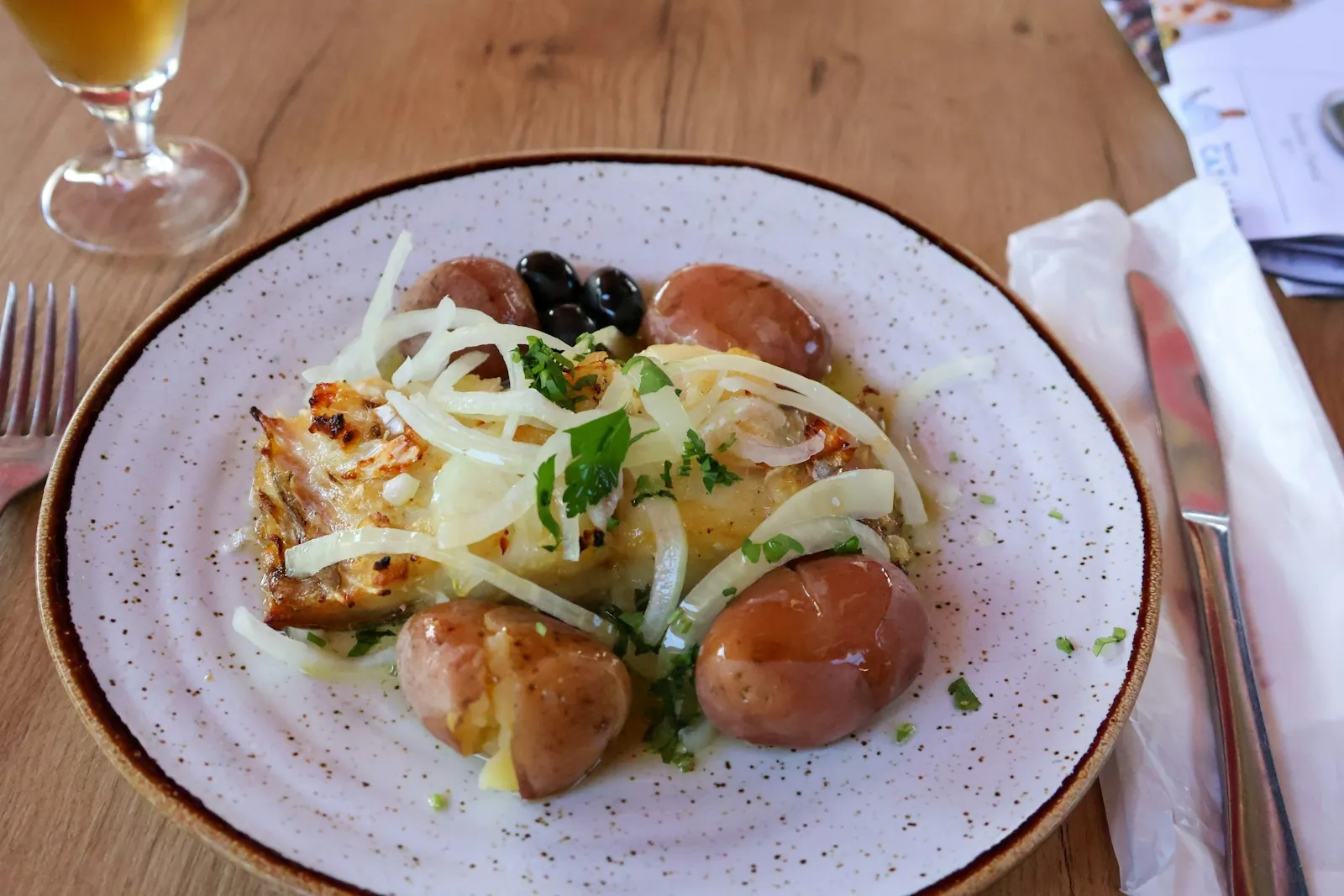
The Portuguese call salt cod o fiel amigo, the faithful friend, and say there’s a recipe for every day of the year. It’s dried and salted, then soaked for a day or two before cooking, which gives it a firmer, flakier texture than fresh cod. You’ll see it on almost every menu. Four versions to know:
Bacalhau à Brás is Lisbon’s own, and the one we’d order first. Shredded cod, onion and matchstick potatoes, bound with softly scrambled egg and finished with black olives and parsley. The story goes that it was invented by a tavern keeper called Brás in Bairro Alto. When it’s made well, it’s comfort food at its best.
Bacalhau com natas is the creamy, baked, gratin version, popular with families and a safe bet for anyone wary of salt cod.
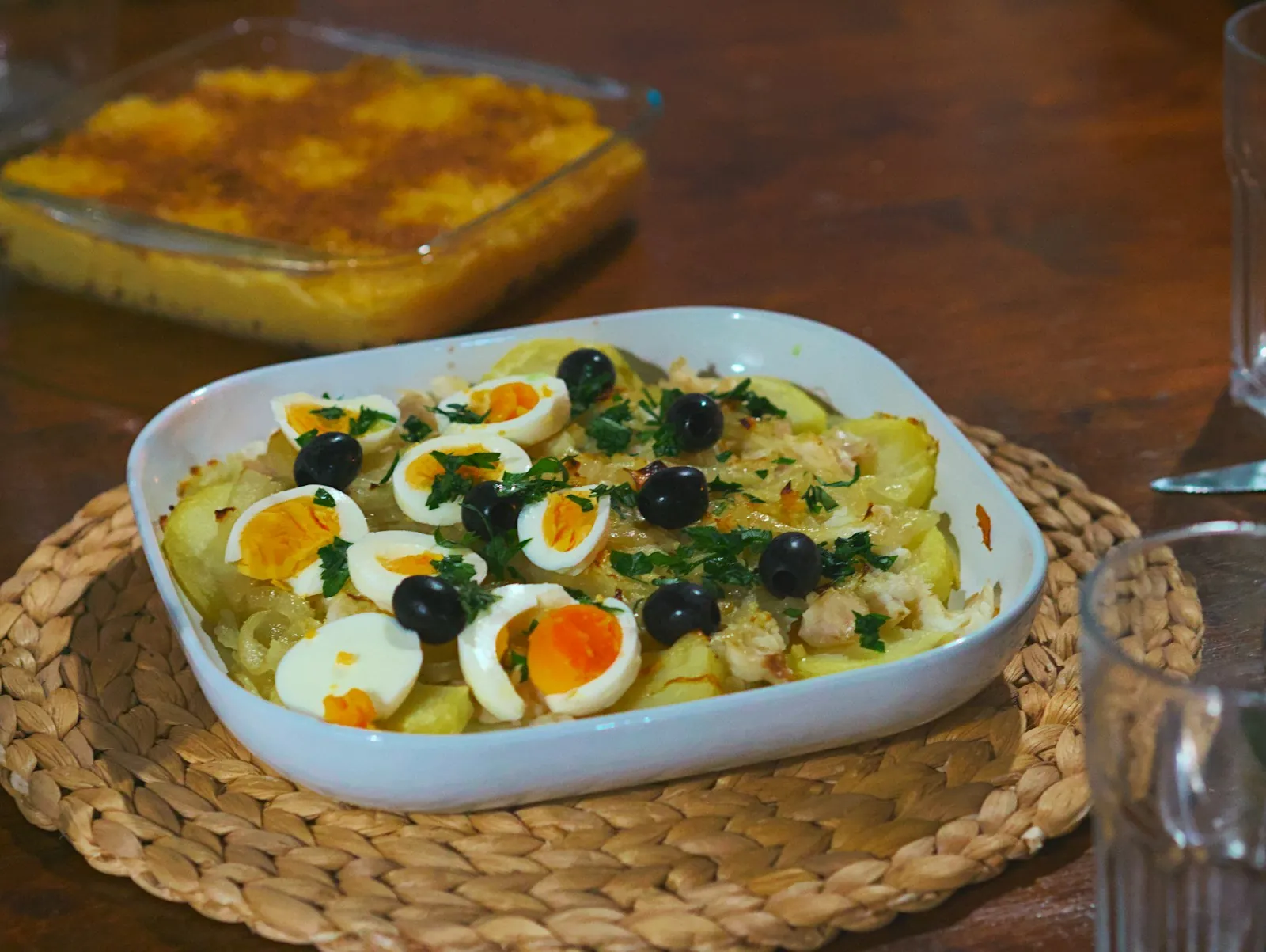
Bacalhau à Gomes de Sá comes from Porto but is on plenty of Lisbon menus: flaked cod baked with sliced potatoes, onion and a lot of olive oil, topped with boiled egg and black olives.
Pastéis de bacalhau are small fried cod and potato croquettes, eaten as a snack or a starter with a glass of wine. You’ll also see a version filled with Serra da Estrela cheese sold in the tourist shops of Baixa. It’s a recent invention, and the traditional ones in a café or tasca are better and cheaper.
On Christmas Eve, salt cod with boiled potatoes, cabbage and eggs is the centre of the Portuguese family table. Our winter guide explains what else happens that night.
From the Sea
Amêijoas à Bulhão Pato. Clams opened in olive oil with plenty of garlic, fresh coriander and a squeeze of lemon. They’re named after Raimundo Bulhão Pato, a 19th-century Portuguese poet. The dish is really an excuse to mop up the sauce with bread, so don’t send the couvert back if you’re ordering these.
Polvo à lagareiro. Octopus, first boiled until tender, then roasted with an indecent amount of olive oil and garlic, served with small potatoes that have been “punched” (batatas a murro) and roasted in their skins. Lagareiro is the man who worked the olive press, which tells you where the oil comes in.
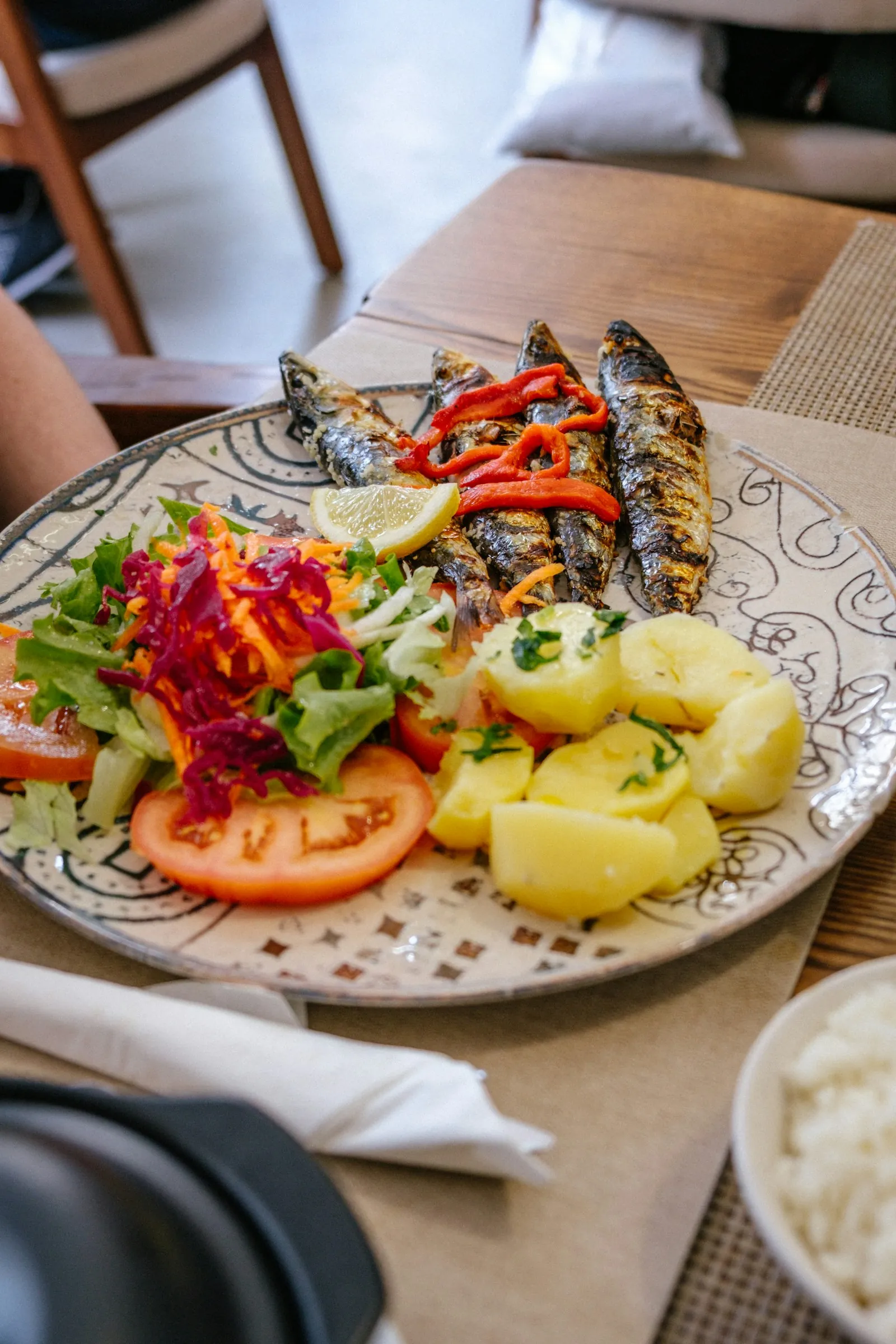
Sardinhas assadas. Grilled sardines on bread are the smell of a Lisbon summer, especially during the June festivals. They’re at their best from about June to September, when they’re fat and full of flavour. Outside summer, many good restaurants simply take them off the menu, which is a sign they know what they’re doing.
Arroz de marisco. Not paella. A soupy, tomato-based seafood rice served in the pot, with prawns, clams, mussels and often crab. It’s made to order, so expect to wait, and it’s sold for two people or more.
Choco frito. Fried cuttlefish strips, a speciality of Setúbal across the river, found on plenty of Lisbon menus too. Crisp outside, tender inside, very good with a cold beer.
Peixe grelhado. Plain grilled fish, often sea bass (robalo), bream (dourada) or horse mackerel (carapau), with boiled potatoes, salad and olive oil. It sounds simple, and it is. Portugal’s fish is good enough that it doesn’t need much more.
Meat, Rice and the Winter Dishes
Arroz de pato. Duck rice: slow-cooked shredded duck mixed with rice, baked in the oven with slices of chouriço on top until the surface goes crisp. It’s one of the reasons we send our Entrecampos guests to O Poleiro, an old-school tasca on a quiet side street.
Cozido à portuguesa. The great winter feast, and not one for small appetites. Several kinds of meat and smoked sausage (chouriço, farinheira, morcela) boiled with cabbage, carrots, turnips and potatoes, all served together on a large platter. Many tascas only make it on one day of the week, so if you see it on the board, that’s your day.
Frango assado. Charcoal-grilled chicken, flattened and brushed with piri-piri chilli oil if you ask for it (com piri-piri). Cheap, quick and loved by everyone, it’s also the classic takeaway: plenty of churrasqueiras sell a whole chicken to take home with chips and salad.
Bitoque. The Portuguese everyday lunch: a thin steak with a fried egg on top, chips, rice and salad. Unglamorous, and almost always good.
Caldo verde. A soup, but it deserves its own line. Potato broth with finely shredded kale and a slice of chouriço, originally from the north. On a wet November evening there’s nothing better, and it’s often the first thing on the menu.
Petiscos: Small Plates to Share
Petiscos are Portugal’s answer to tapas, and an evening of them with a jug of wine is one of the best ways to eat in Lisbon. A few to look out for:
- Peixinhos da horta: green beans fried in a light batter. The story goes that Portuguese missionaries took the idea to Japan in the 16th century, where it became tempura.
- Pica-pau: small pieces of beef in a garlicky, beery sauce with pickles, eaten with toothpicks and bread.
- Moelas: chicken gizzards stewed in tomato sauce. Better than they sound.
- Presunto and queijo: cured ham and cheese. Look out for queijo da Serra and the softer Azeitão, both runny, rich and worth trying.
- Caracóis: small snails in a garlic and oregano broth, a summer obsession. A sign saying Há caracóis (“we have snails”) in a café window means the season has started.
- Tremoços: salted lupin beans served free with a beer in many cafés. Pinch off the skin and eat the inside.
Something Sweet
Portuguese desserts are built on eggs and sugar, a legacy of the convents that once made them. In a tasca, look for arroz doce (rice pudding dusted with cinnamon), pudim (a firm, dark caramel flan) and baba de camelo, literally “camel’s drool”, a sticky mousse made from condensed milk caramel. Then there’s the pastel de nata, which has its own guide.
The calendar matters too. From late October the chestnut sellers are on the streets, and in the weeks before Christmas, until 6 January, every bakery sells bolo-rei, the Christmas cake crowned with candied fruit.
What to Drink With It
The house wine (vinho da casa) in a good tasca is usually perfectly decent and inexpensive, served by the glass or the jug. Vinho verde, the light, fresh white from the north, goes with almost anything from the sea. Finish with a bica, Lisbon’s word for an espresso, and perhaps a small glass of something stronger. Our guide to drinking in Lisbon covers the rest, from ginjinha to the kiosks.
Where to Try All This
A few places that do traditional Portuguese food properly, and that we recommend to our own guests:
Solar dos Presuntos, on Rua das Portas de Santo Antão, is very traditional Portuguese food and seafood, and always packed. Cervejaria O Pinóquio, on Praça dos Restauradores, is one of the best places in the city for seafood and the classics. Go early or book: both fill up fast. Cervejaria Ramiro is the seafood temple, and Zé da Mouraria does enormous, old-school portions for sharing. Both are in our restaurant guide.
For trying lots of dishes in one go, a covered market is the easy option. Our market guide explains which ones to visit and what to eat there.
And our honest general rule: the best traditional food in Lisbon is rarely on the main tourist streets. A menu with photographs, in six languages, and a waiter outside trying to wave you in, is usually a sign to keep walking. A paper tablecloth, a handwritten menu and a room full of people having lunch on a weekday are usually a sign to sit down.
A Few Words Worth Knowing
- Grelhado / assado / frito / cozido: grilled / roasted / fried / boiled
- À casa: the house style
- Dose / meia dose: portion / half portion
- Prato do dia: dish of the day
- Sem picante: not spicy
- A conta, por favor: the bill, please
Want to cook some of this yourself? All our apartments have a kitchen, and we’re happy to tell you where to buy the best fish and bread nearby. Browse our apartments and book direct.
Photos via Unsplash: salt cod at Restaurante D’ Bacalhau, Lisbon, by Meg von Haartman; bacalhau à Gomes de Sá by David Magalhães; grilled sardines by Johan Mouchet.